The fuel chain is pumpjack → crude-oil transport → refinery → gasoline transport → gas station. Locate where supply stops moving, then inspect that handoff before adding more production.
1. Know what each part does
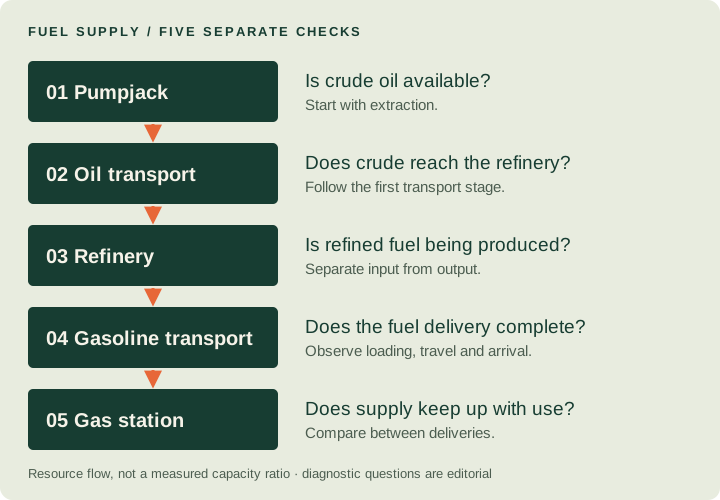
| Part | Role in the chain | Observation to make |
|---|---|---|
| Pumpjack | Extracts crude oil. | Is oil available to enter the transport stage? |
| Oil transport | Moves crude oil toward refining. | Does the crude delivery reach the refinery? |
| Refinery | Turns crude oil into gasoline. | Does refined fuel become available? |
| Gasoline transport | Moves the refined product to stations. | Do vehicles load, travel and complete a delivery? |
| Gas station | Receives fuel for the demand at the station. | Does supply arrive, and how quickly is it used? |
The developer’s first devlog describes the chain. In Orbital Potato’s recording, the fuel lesson begins around 33:01; construction of its components follows. Use that sequence to identify the buildings in your current menu.
2. Check connections before capacity
As you follow the chain, inspect road access at both ends of each transport stage. In the recorded setup, the creator notices a missing connection while building the oil system. Placing the right buildings is only part of making a delivery route.
Start with a single identifiable trip. Record its origin, destination, whether it loads and whether it arrives. If you lose sight of the vehicle, do not turn that into a claim that it vanished or never delivered; repeat the observation from a better camera angle.
3. Read the pattern of stock
| Pattern you observe | Start investigating here | Why this is the next check |
|---|---|---|
| No crude supply is visible. | Extraction and the first pickup. | A downstream station cannot explain an absent first input. |
| Crude is available, but the refinery receives little or none. | Crude transport and its route. | Adding extraction would not directly test this handoff. |
| The refinery receives crude, but little fuel appears. | Refining activity and what its interface reports. | Separate receiving the input from producing the output. |
| Refined fuel is available, but the station stays empty. | Gasoline pickup, route and arrival. | This points your inspection downstream of production. |
| A delivery arrives, but the station soon empties. | Delivery frequency versus consumption over time. | The route works at least once; keeping up with demand is a different question. |
Use inventory information where the game exposes it and visible deliveries where it does not. These patterns choose an investigation; they are not proof that a particular building is malfunctioning.
4. Observe one complete delivery cycle
- At pickup: is the needed resource available, and does the vehicle actually load?
- On the outbound trip: does it keep moving, queue or stop at a particular connection?
- At the destination: does it reach the intended recipient and complete a delivery?
- Between deliveries: does the station remain supplied or run out again?
- On the next cycle: is the delay repeatable, or was it a single interruption?
Include loading, travel and any queuing in your comparison. Measuring only the moving part of a trip would miss delays at either end. If a vehicle is visibly stuck, use the traffic route checks alongside this chain.
5. Why enough production can still feel too slow
Delivery rate, not just load size
Imagine a delivery carrying 60 units every 3 minutes. That averages 20 units per minute. If a station uses 25 units per minute, the gap is 5 units per minute even though every delivery arrives successfully.
If the same load takes 5 minutes because of delays, its average falls to 12 units per minute. The example shows why a full source building does not establish adequate delivery. The values are invented for explanation; they are not Car Park Capital vehicle capacities or timings.
In general: delivered amount ÷ complete cycle time gives an average for the observed cycle. Only use this calculation with quantities your game actually lets you measure. Short observations can also miss fluctuations in demand.
6. Choose the next change from the evidence
Change one part after you identify the weak handoff. If a loaded vehicle spends its trip in a queue, investigate that route. If the station empties between successful deliveries, compare how often deliveries arrive with consumption. If the refinery has no input, return to crude supply.
The Steam discussion about slow gasoline deliveries contains different player setups. It does not control for distance, congestion or station demand, so the building counts are not a reliable “one refinery needs X trucks” formula.
Read the original delivery reports ↗
Keep the original arrangement as a checkpoint, record the change and compare another complete cycle. Stop expanding upstream production if your observations keep pointing to the same downstream delivery problem.
Fuel questions
Are oil transport and gasoline transport the same step?
They serve different handoffs: crude oil goes toward the refinery, and gasoline goes from refining toward stations. Check the stage you need rather than assuming one transport setup covers the whole chain.
How many refineries or transport buildings should I build?
No universal count is established by the reviewed sources. Route length, delivery delays and demand need to be observed before a count becomes meaningful.
Does this page contain a confirmed bug fix?
It contains a source-backed chain and a diagnostic method. The player thread reports symptoms and setups, but it does not establish a developer-confirmed fix for all slow deliveries.
Sources & verification
Evidence: official information, attributed community methods and reviewed gameplay captions. The October 8 videos use a pre-release review build; captions and current menus may differ. We have not personally tested the game. Diagnostic examples are our reasoning tools, not measured game results.